Drone Supply Chains Strengthened as Protolabs Grows CNC and MJF
The global drone market continues to expand across commercial delivery, infrastructure inspection, precision agriculture, and defense applications, placing new demands on manufacturing agility. Drone manufacturers increasingly require production partners that can deliver precision parts with short lead times and support rapid design changes, whether for lightweight frames or complex internal components.
Meeting the Surge in Drone Manufacturing Demand

Protolabs, a major digital manufacturing service provider, has responded by expanding its computer numerical control (CNC) machining and Multi Jet Fusion (MJF) 3D printing services specifically for the drone sector. The move augments the company’s existing on-demand manufacturing network, giving drone builders streamlined access to both subtractive and additive processes from a single source.
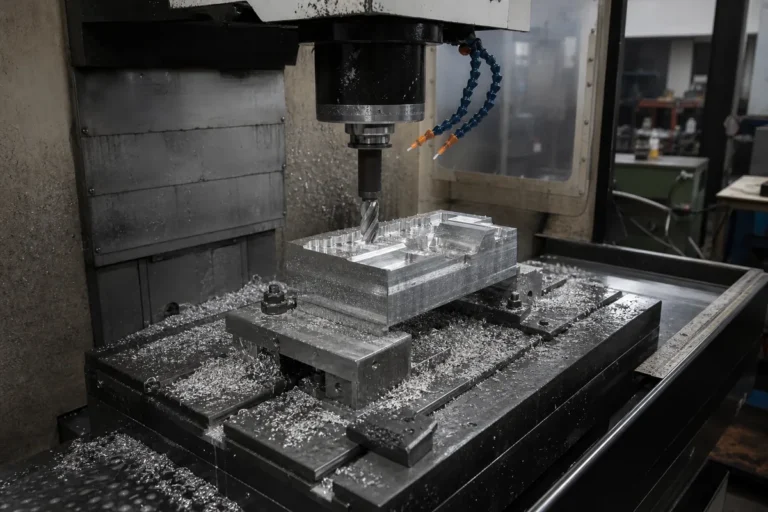
While details of the capacity increase or specific material additions were not disclosed, the focus on drones signals a strategic alignment with an industry that prizes speed and flexibility. CNC Machining remains essential for producing metal brackets, motor mounts, and structural housings, where high strength and tight tolerances are non-negotiable. Simultaneously, MJF technology enables rapid, cost-effective production of complex nylon parts—such as internal ducting, protective enclosures, and customized aerodynamic surfaces—that would be difficult or expensive to machine.
What the Expansion Entails
By dedicating additional resources to drone-related workflows, Protolabs aims to shorten the typical lead times from design upload to part shipment. Drone developers can upload CAD files through the company’s online platform, receive instant design-for-manufacturability feedback, and have finished parts in their hands within days. This model eliminates the need for in-house tooling or inventory, freeing teams to focus on iterative design and testing.
The combined CNC and MJF offering addresses the full product lifecycle—from early-stage prototypes to low- and mid-volume production runs. Manufacturers can machine functional metal prototypes to validate strength and thermal performance, then shift to MJF for lightweight production parts, all within the same quoting and ordering system. This integration reduces supply chain complexity and helps drone projects stay on schedule.
The Role of CNC Machining in Drone Production

Precision machining is foundational to drone airframe construction. Components such as landing gear mounts, gimbal brackets, and motor cooling plates must withstand vibration, shock, and environmental stress without adding excessive weight. CNC multi-axis milling and turning accommodate a wide range of materials, from aircraft-grade aluminum and stainless steel to engineering thermoplastics, ensuring that parts meet both structural and weight budgets.
For defense-oriented drone programs, machining also offers traceability and material certifications often required by government contracts. The ability to source CNC-machined parts from an ISO 9001 certified supplier simplifies compliance documentation and reinforces supply chain integrity.
MJF 3D Printing for Complex Geometries
Multi Jet Fusion stands out for its layer-by-layer fusing of powdered nylon, producing parts with isotropic mechanical properties and fine detail. Drones benefit from the technology’s capacity to consolidate multiple components into a single printed part, reducing assembly time and potential failure points. Lightweight ventilation ducts, sensor housings, and prop guards can be optimized for aerodynamics without tooling constraints, enabling designs that would be impractical with traditional manufacturing.
Moreover, MJF’s high throughput and relatively low per-part cost make it viable for production volumes beyond mere prototyping. Small and medium-sized drone enterprises can leverage this to scale output quickly without large capital outlays, supporting everything from initial market testing to full commercial rollout.
Implications for the Drone Industry
Access to expanded digital manufacturing capacity alters the economics of drone development. Start-ups and established firms alike can compress development timelines, respond faster to customer feedback, and diversify their supplier base. In an industry where regulatory environments and mission requirements shift rapidly, manufacturing agility becomes a competitive advantage.
The Protolabs expansion also mirrors a broader trend of service bureaus deepening their vertical expertise, moving beyond generic part production to offer targeted solutions for aerospace, medical, and now drone markets. This specialization often brings improved outcome predictability and tighter integration with customers’ design workflows.
| Aspect | Details |
|---|---|
| Service focus | Increased capacity for CNC machining and MJF 3D printing tailored to drone manufacturing |
| Core technologies | Multi-axis CNC milling and turning; HP Multi Jet Fusion additive manufacturing |
| Typical applications | Structural frames, brackets, motor mounts, sensor enclosures, aerodynamic housings, ducting |
| Material range | Aluminum, stainless steel, engineering plastics (CNC); nylon PA12 and similar polymers (MJF) |
| Production scale | Prototyping through low- to mid-volume production runs, with scalable output |
| Industry benefits | Reduced lead times, simplified supply chains, faster design iteration, defense compliance support |
The move reflects a broader trend of digital manufacturing platforms angling to serve high-growth verticals with specialized capabilities, potentially reshaping how drone hardware moves from concept to deployment.
Why This Matters
The expansion underscores the growing reliance of the drone sector on digital manufacturing for rapid iteration and production scaling. By combining precision machining with additive manufacturing under one roof, Protolabs helps drone companies compress development timelines and bypass traditional tooling bottlenecks, a critical advantage as both commercial and defense drone markets accelerate.
FAQ
What exactly is Protolabs offering to drone manufacturers?
Protolabs is dedicating additional capacity in its CNC machining and Multi Jet Fusion (MJF) 3D printing services specifically for drone production. This means drone builders can source precision metal and plastic parts, as well as nylon components via additive manufacturing, through the company’s existing online quoting and ordering platform.
Why are CNC machining and MJF important for drones?
CNC machining delivers the high-strength, tight-tolerance parts needed for structural drone components like airframes and motor mounts. MJF, on the other hand, enables complex, lightweight geometries—such as integrated ducting or sensor housings—that are hard to produce with traditional methods, all with fast turnaround.
How does this expansion affect drone prototyping and production?
The expansion shortens lead times for both prototypes and production parts, helping drone developers iterate faster. It also supports scalable manufacturing from small batches to medium volumes, eliminating the need for expensive tooling and reducing time-to-market.
Is this expansion aimed at commercial or defense drone sectors?
The announcement targets both realms. Commercial applications—like delivery, inspection, and agriculture—benefit from rapid prototyping and cost-efficient scaling, while defense programs gain access to certified, traceable manufacturing processes essential for military contracts.
Sources
- Protolabs (protolabs.com)
Source: 3D Printing Industry