Power generation, oil & gas and renewables rely on corrosion- and heat-resistant precision components. VT machining supports Energy customers with Energy & Power, selecting the optimal process and alloy for each component and producing it to your exact requirements.
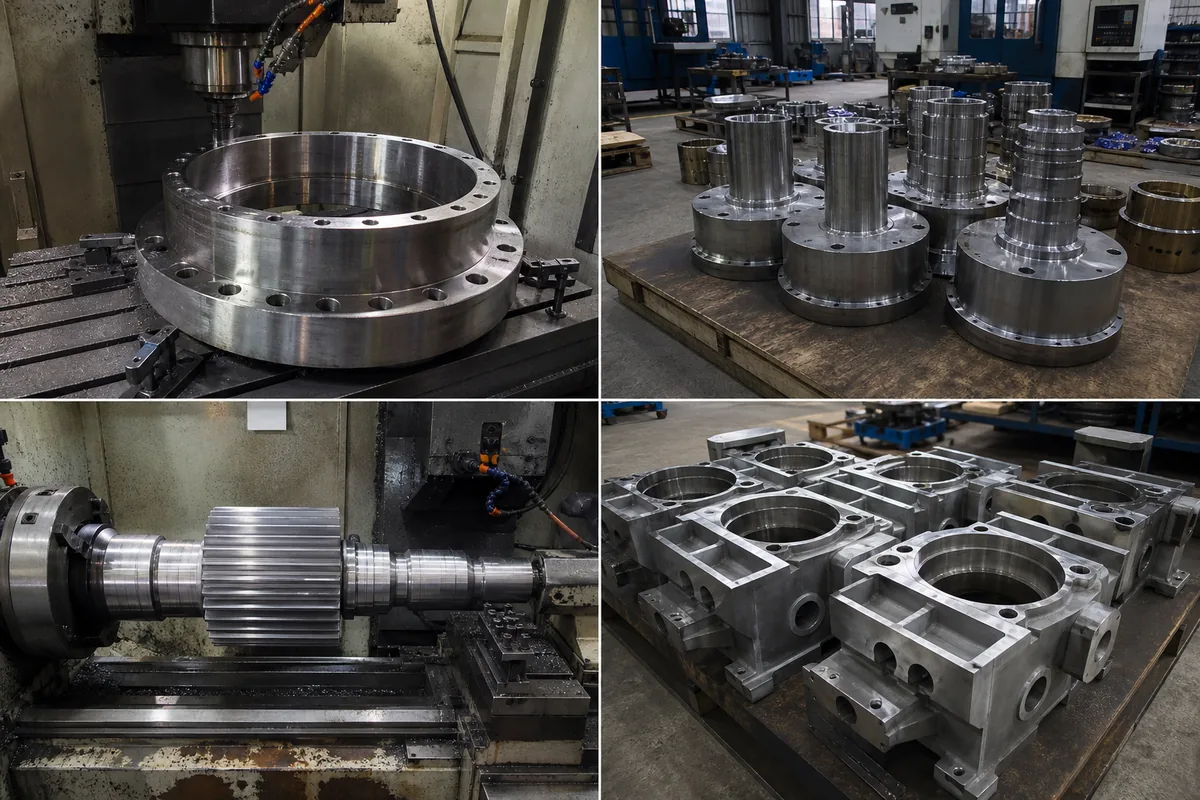
Typical Energy & Power We Manufacture
- Flow-control components
- Heat-exchanger plates
- Turbine hardware
- Sealing faces
- Busbars and contacts
Components We Build for Energy
Representative jobs with the material, size, driving callout and typical volume. Use it to judge whether your part is in our range before you spend time preparing an RFQ.
| Component | Material | Size | Driving callout | Typical volume |
|---|---|---|---|---|
| Valve seat | 316L / Inconel 625 | Ø45 × 20 mm | Seat 45° ±0.1°, Ra 0.2 µm | 1,000 / year |
| Heat-exchanger plate | 316L, 0.6 mm | 400 × 120 mm | Etched channel depth ±0.02 mm | 3,000 / year |
| Turbine hardware | Inconel 718 (aged) | 120 × 60 × 30 mm | ±0.02 mm, PMI on request | 300 / year |
| Power busbar | C11000 copper, 5 mm | 300 × 50 mm | Silver plated 5 µm, contour ±0.1 mm | 5,000 / year |
| Sealing face ring | Duplex 2205 | Ø120 / Ø90 × 15 mm | Flatness 0.01 mm, Ra 0.4 µm | 600 / year |
Processes for Energy & Power
These VT machining processes are most commonly used to produce Energy & Power. Follow any link for process capability and material options.
Common Materials for Energy & Power
Typical alloy families for Energy & Power. Each links to the relevant process and material capability.
Recommended Grades for Energy & Power
Specific alloy grades we frequently machine for Energy & Power. Each links to detailed process-and-grade capability.
Industry Requirements for Energy & Power
Parts destined for Energy applications are held to demanding functional and quality expectations. Tolerance control, material certification and consistent quality across every batch are non-negotiable.
VT machining plans each Energy & Power job around those requirements from the first review of your drawing. Critical features, datums and material condition are agreed up front, and we raise DFM points early rather than late.
Standards, Documentation & Testing
What Energy buyers normally specify, and what we supply with the shipment. Anything on this list can be added to an order — tell us at RFQ stage so it is priced in rather than bolted on.
| Requirement | How we handle it |
|---|---|
| Material certificate | EN 10204 3.1 or 3.2 including chemical and mechanical test results. |
| PMI | Positive material identification by XRF on nominated alloys. |
| Pressure testing | Hydrostatic or leak testing to your specified pressure, with a test record. |
| Sour service | NACE MR0175 / ISO 15156 compliant grades and hardness limits where specified. |
| Weld procedure | WPS/PQR-backed welding through qualified partners when the assembly needs it. |
| Heat treatment | Furnace charts supplied with the shipment for stress-relieved and hardened parts. |
Design & Manufacturing Considerations
Every Energy & Power part has an optimal manufacturing route, and we help you find it. We commonly draw on CNC Grinding, Laser Cutting, CNC Milling, CNC Turning, CNC Drilling, CNC Tapping and combine operations where it improves accuracy or reduces cost.
An early look at your CAD means we can suggest cost-saving design adjustments. We highlight where a looser non-critical tolerance or a standard feature size would reduce cost.
Quality, Inspection & Compliance
Quality control runs through every Energy & Power order. Key features are monitored during the run and verified at final inspection, including CMM where required.
We provide the traceability and inspection records your Energy quality system expects. Tell us the documentation and standards you work to and we will align our process and records accordingly.
Why Choose VT machining for Energy & Power
VT machining (Shenzhen Xinxin Precision Equipment Co., Ltd.) supports Energy & Power from prototype through to production volume. Because we control the whole chain — machining, finishing and inspection — parts arrive complete and on time.
Provide your drawing, the alloy, the volume and any documentation requirements. Our engineers respond in English with feasibility, pricing and a realistic lead time — usually within one business day.
No drawing yet? Build one in the browser.
Set the metal, dimensions and features, watch the 3D model update as you type, then switch to the 2D sheet to add dimensions and tolerances. Download it or send it straight to us with your RFQ.
What We Need to Quote Energy & Power
- GeometrySTEP or IGES for the 3D model, plus a PDF drawing if you have tolerance callouts. A dimensioned sketch is enough to start.
- MaterialThe exact alloy, grade and condition — temper, heat-treat state or hardness. If you are not sure, tell us the function and we will suggest one.
- QuantityPrototype count and the expected annual volume. Both change how the part is made and therefore what it costs.
- TolerancesWhich features are critical. Everything else runs to our standard tolerance, which is what keeps the price sensible.
- FinishSurface treatment, cosmetic requirements, and any faces that must be masked.
- DocumentsWhether you need a material certificate, dimensional report, FAIR or PPAP with the shipment.
Missing something from the list is not a problem — send what you have. We will come back with the specific questions rather than a generic form.
Send the drawing, the material and the quantity. Pricing, lead time and DFM notes come back — usually within one business day.
Request a QuoteFrequently Asked Questions
How do I get a quotation for Energy & Power?
Send your CAD model or 2D drawing, the material/grade you need and your quantity. Our engineers usually reply within one business day with feasibility, lead time and pricing.
What materials are typically used for Energy & Power?
Common materials for Energy & Power include Stainless Steel, Inconel, Copper, Titanium. We work across a wider machining metal set on request; tell us the alloy and grade you need and we will confirm capability.
Which processes are used for Energy & Power?
We commonly use CNC Grinding, Laser Cutting, CNC Milling, CNC Turning, CNC Drilling, CNC Tapping for Energy & Power. The right route is chosen per part — share your geometry and tolerance and we will confirm the optimal process and any secondary operations.
Do you have experience supplying energy customers?
Yes. VT machining supplies Energy customers worldwide. We work to your drawings and quality requirements, and respond to RFQs in English with clear pricing and lead time.
Can you provide finishing and surface treatment for Energy & Power?
Yes — we offer in-house finishing (polishing, deburring, honing) and arrange external treatments such as plating, anodising or passivation depending on what your Energy & Power parts require.
What does VT machining produce for Energy & Power?
VT machining produces precision metal parts for Energy & Power in the Energy sector, including flow-control components, heat-exchanger plates, turbine hardware, sealing faces. Every part is manufactured to your CAD or 2D drawing, with the process and material selected to suit your tolerance, finish and volume requirements.