China Precision CNC Steps Up as Global OEM Machining Partner
For decades, global manufacturers in high-cost economies handled precision component production inside their own factories or through a network of nearby job shops. That model is now being reshaped as China Precision CNC, a specialist in CNC machining, systematically builds an OEM service business that connects directly with industrial buyers across North America, Europe and Asia. Rather than forcing companies to invest in capital equipment, the firm offers turnkey machining capacity that delivers finished parts on repeatable timelines.
The shift matters because it moves beyond one‑off prototyping and small‑batch niche work towards scaled, repeat‑order manufacturing. Buyers can embed China Precision CNC’s output directly into their assembly lines without altering internal workflows, which lowers the barrier for firms that need precision components but lack the appetite for in‑house machining expansion.
Market context: China’s machining sector scales up

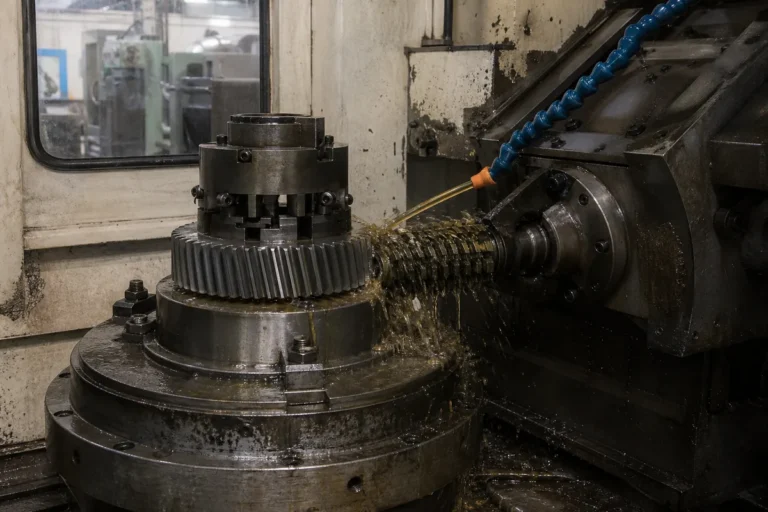
China’s CNC machining industry has evolved from a low‑cost commodity supplier into a tiered ecosystem capable of holding tolerances tight enough for automotive, medical and aerospace applications. Hundreds of shops now operate with multi‑axis equipment, automated tool‑changers and in‑line inspection systems that rival the capability of counterparts in Germany or Japan. Against that backdrop, dedicated OEM‑focused service providers like China Precision CNC are positioning themselves not as generic parts brokers but as integrated process partners that manage everything from material sourcing to surface finishing.
This functional depth allows global manufacturers to treat outsourced machining as a fixed‑cost line item rather than a variable‑capacity gamble. Industry surveys consistently show that lead‑time consistency and repeatable quality rank higher than headline price for procurement managers, and the Chinese sector’s investment in statistical process control is designed to address exactly those priorities. The outcome is a supply‑chain architecture where a single company can handle everything from a few hundred prototype units to tens of thousands of serial‑production pieces without the buyer needing to switch suppliers mid‑programme.
Technical and standards implications

Supplying components that slot directly into an OEM’s assembly sequence demands more than machine precision; it requires alignment with internationally recognised quality frameworks. China Precision CNC operates under ISO 9001‑certified procedures, and many of its customer‑facing workflows are mapped to AS9100 controls for aerospace‑tier traceability. The company’s in‑house metrology labs are equipped with coordinate measuring machines and optical comparators that generate dimensional reports accepted by foreign design‑authority engineers without supplementary validation. That documentation layer is what differentiates a true OEM machining partner from a basic capacity provider.
Standardised communication protocols are becoming equally important. The firm accepts native CAD files from platforms such as SolidWorks, Siemens NX and CATIA, and it offers design‑for‑manufacturability feedback loops that help overseas designers adjust features for machinability without compromising function. By shortening the engineering‑change cycle, these interactions reduce the total time‑to‑market window that global OEMs prize when launching new products.
What to watch next
Tariff regimes and logistics costs remain the two biggest external variables shaping the trajectory of China‑based OEM machining. Should duties on machined metal components adjust in key import markets, service providers may accelerate investment in final‑assembly touchpoints outside mainland China to preserve landed‑cost competitiveness. At the same time, the growing complexity of electric‑vehicle powertrain components and surgical instruments is creating niche windows that reward shops with multi‑material experience—areas where companies like China Precision CNC are already building dedicated cells.
Procurement managers are also watching whether the company expands its finishing capabilities to include certified clean‑room packaging for medical devices, a move that would open a new tier of regulated‑industry contracts. Any such step would signal a deeper integration with OEM quality‑management systems and likely trigger additional third‑party audits.
The unfolding story is less about a single corporate announcement and more about a structural shift in how precision parts move from machine‑shop floor to factory line. As the footprint of Chinese CNC machining services widens, the boundary between “in‑house” and “outsourced” manufacturing is set to blur further, giving global OEMs a broader set of levers to manage cost, capacity and time‑to‑volume.
| Aspect | Current state | Significance |
|---|---|---|
| Service model | End‑to‑end OEM machining, from material procurement to finished‑part delivery | Allows global manufacturers to outsource complete process steps |
| Quality framework | ISO 9001 certified, with workflows aligned to AS9100 and in‑house metrology | Meets traceability requirements for aerospace and medical suppliers |
| Digital integration | Accepts native CAD files; provides design‑for‑manufacturability reviews | Shortens engineering‑change cycles and accelerates time‑to‑market |
| Market reach | Serves OEMs in North America, Europe and Asia | Reflects a geographically diversified customer base beyond domestic demand |
| Key watch point | Potential expansion into clean‑room medical‑device finishing | Would unlock regulated‑industry contracts and deeper OEM quality‑system integration |
Monitoring how manufacturers blend in‑house machining with third‑party OEM capacity will be essential for understanding the next phase of global supply‑chain design.
Why This Matters
The move signals a maturation of China’s machining industry beyond low‑cost part supply into full‑fledged OEM integration. For global manufacturers, it offers a viable lever to reduce capital expenditure and gain flexible capacity without sacrificing the certifications and traceability that regulated industries demand.
FAQ
Who is China Precision CNC?
It is a company specialising in precision CNC machining services that functions as an OEM partner for manufacturers worldwide. Its operations cover material sourcing, multi‑axis machining, finishing, and quality inspection under internationally recognised standards.
What does this mean for global manufacturers?
Manufacturers can outsource precision component production to a qualified partner, reducing the need for in‑house machining assets and allowing them to concentrate on assembly, design and distribution. The arrangement offers fixed‑cost predictability and access to scalable capacity.
How significant is this development for supply chains?
It reflects a structural shift in which Chinese CNC machining firms move from being spot‑market suppliers to long‑term, integrated process partners. This change can lower entry barriers for companies looking to launch or ramp up products that require tight‑tolerance parts.
When will the impact become visible?
The impact is already unfolding as procurement managers incorporate these services into existing sourcing strategies. Any near‑term effects are likely to be felt in shorter lead times and reduced tooling investments for new product introductions.
Sources
- StreetInsider (streetinsider.com)
- ISO 9001 (iso.org)
Source: StreetInsider