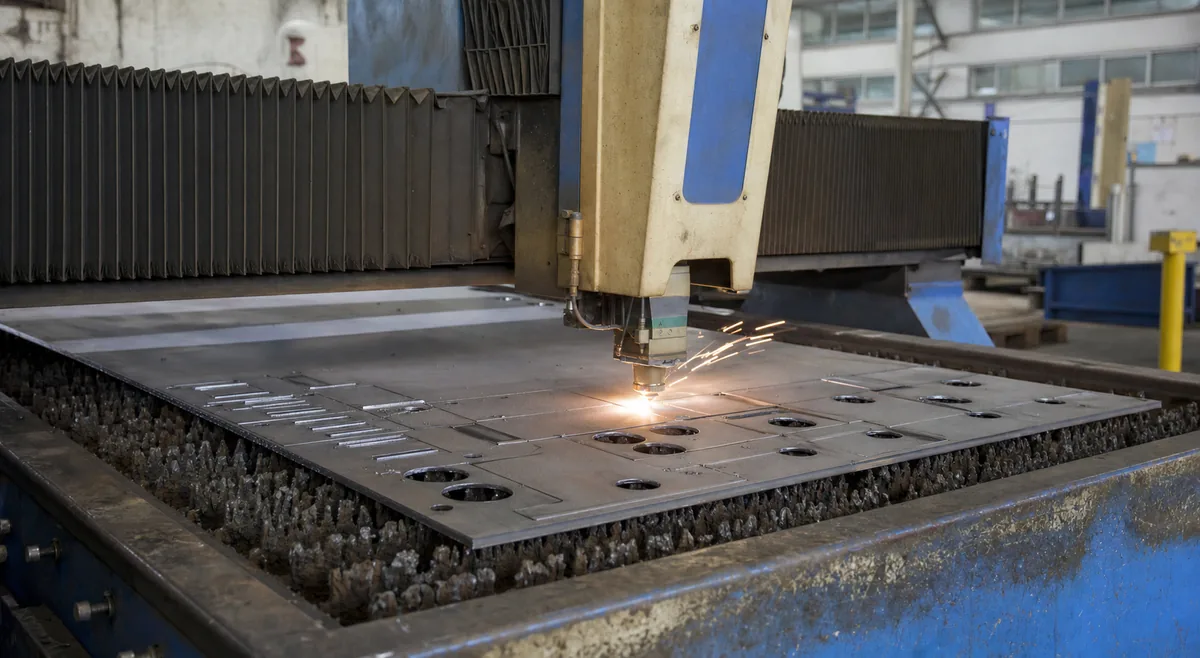
Laser Cutting is a core in-house capability at VT machining, supported by full inspection and a single engineering contact from quote to delivery.
Fiber laser cutting melts and ejects metal along a programmed path, producing a narrow kerf and a clean, near burr-free edge. Every job is programmed from your geometry, run on calibrated equipment and checked against the print before it ships.
Design your Laser Cutting part online — free 3D + 2D drawing builder
No CAD licence, no sign-up, no cost. Set your metal, dimensions and features in the browser, see the part update live in 3D, switch to 2D to add dimensions and tolerances, then send the drawing straight to our laser cutting team for a quotation.
Live 3D preview — rotate, zoom and explode the model as you type
Built-in 2D drawing sheet with dimensions, tolerances and notes
Download the preview or send it with your RFQ in one click
Free to use, unlimited revisions, nothing to install
Start here — it’s free
VT CNC Machining3D
Laser Cutting BuilderConfigure laser cut sheet metal parts: outer contour, cut openings, hole arrays and slots with a clean, narrow kerf and near burr-free edges. Every builder includes the Freeform Corner & Region Editor: cut or add material of any shape directly on the 3D model, then submit an RFQ.This tool is for visual configuration only. Final dimensions, tolerances, materials, coatings, and manufacturability will be reviewed from your drawing or specification.
Paste a configuration JSON (from Export) or a copied RFQ summary. The product and all recognized parameters are applied automatically; unknown parameters are listed and skipped.
Answer the choices below step by step — every value comes from the real option list, so it always renders.
Save the current configuration under a name and recall it any time on this device.
2D PreviewYour browser is showing a simplified engineering preview because WebGL is unavailable.
Laser Cutting Builder
Interactive visual preview for custom CNC machining configuration.
CMD
Import Code (One-Click Recall)
Save this code before you leave — it is the only way to recall this exact model. If you lose it, your configuration cannot be restored.
SUBMIT RFQ — ENGINEERING REVIEWYour current 3D configuration and specification summary are attached automatically. Attach a drawing if you have one.
FREQUENTLY ASKED QUESTIONSWhat sheet thicknesses can be laser cut?
Fiber laser cutting covers thin foils up to plate; common stainless and aluminum sheets from 0.5 to 12 mm cut with a clean, narrow kerf and near burr-free edges. Thickness limits depend on the metal.
How fine can cut features be?
Kerf width is typically 0.1-0.3 mm; minimum feature and hole sizes around 1x material thickness are routine, finer on request or via chemical etching for very thin foils.
Laser Cutting is a thermal cutting process. A focused, high-power beam melts the metal along a programmed contour while an assist gas ejects the melt, leaving a narrow kerf and a clean, square, near burr-free edge — with no hard tooling to make or change.
Our shop runs Laser Cutting daily, which means proven parameters and short setup times. Fiber laser cutting melts and ejects metal along a programmed path, producing a narrow kerf and a clean, near burr-free edge. Upload your geometry — or draw it in the free builder on this page — and we will come back with pricing and DFM notes.
How Laser Cutting Works at VT machining
A focused fibre-laser beam melts and blows material from the metal sheet along the programmed contour. Power, focal position, nozzle stand-off and assist-gas pressure are tuned to the alloy and thickness for a clean, square edge.
We start from your supplied geometry and tolerance scheme. The setup is designed to minimise re-clamping, which protects positional accuracy across features. A first article is verified against the drawing before the balance of the batch is released.
1
Send your drawing
CAD model, PDF print — or a drawing you build free on this page. We reply with feasibility, price and lead time.
2
Nesting & parameter set-up
Parts are nested for yield; power, focus and assist gas are tuned to alloy and thickness.
3
Laser Cutting run
First article is verified against the print before the balance of the batch is released.
4
Inspection & dispatch
In-process checks plus final inspection, with CMM reports, mill certs and FAIR on request.
Laser Cutting Tolerances & Surface Finish
Laser-cut metal holds contour tolerances around ±0.05 mm depending on thickness, with a narrow kerf and a clean, near burr-free edge.
The tightest tolerances are reserved for the features your drawing flags as critical. Share your tolerance scheme and we will confirm what is realistic before quoting.
Laser Cutting — capability summary
Sheet size
Up to 3000 × 1500 mm
Thickness
Steel to 20 mm, stainless to 12 mm, aluminium to 10 mm
Kerf width
0.1–0.3 mm
Contour tolerance
±0.05 mm
Assist gas
N₂ for oxide-free edge, O₂ for thicker carbon steel
Lead time
Prototypes 5–10 days · production 10–20 days
Documentation
Dimensional report, material certificate, FAIR on request
Figures are typical in-house capability. Send your drawing and we will confirm what is achievable for your specific part.
Laser Cutting by Metal — Choose Your Material
Each material page covers how Laser Cutting behaves in that alloy, what tolerances are realistic and where the parts are used.
We are happy to suggest design tweaks that improve manufacturability. Keeping holes no smaller than the material thickness, allowing for kerf, and grouping features sensibly improves edge quality and nesting yield on metal. If you send your model early, we will return practical DFM feedback before you commit to production.
Secondary Operations & Finishing
Finished metal parts can move straight into secondary operations under one roof. Typical add-ons are deburring, passivation, anodising, plating, blasting, polishing and laser marking. We coordinate the whole chain so you receive complete, inspection-ready parts.
Laser Cutting Quality & Inspection
We control quality throughout the process, not just at the end. In-process checks plus final inspection — including CMM where specified — keep every metal part to print. Inspection reports, material certificates and first-article documentation can be supplied on request.
Industries That Order Laser Cutting
Laser Cutting parts made by VT machining go into the sectors below. Each page lists the typical components, preferred alloys and the tolerance expectations for that industry.
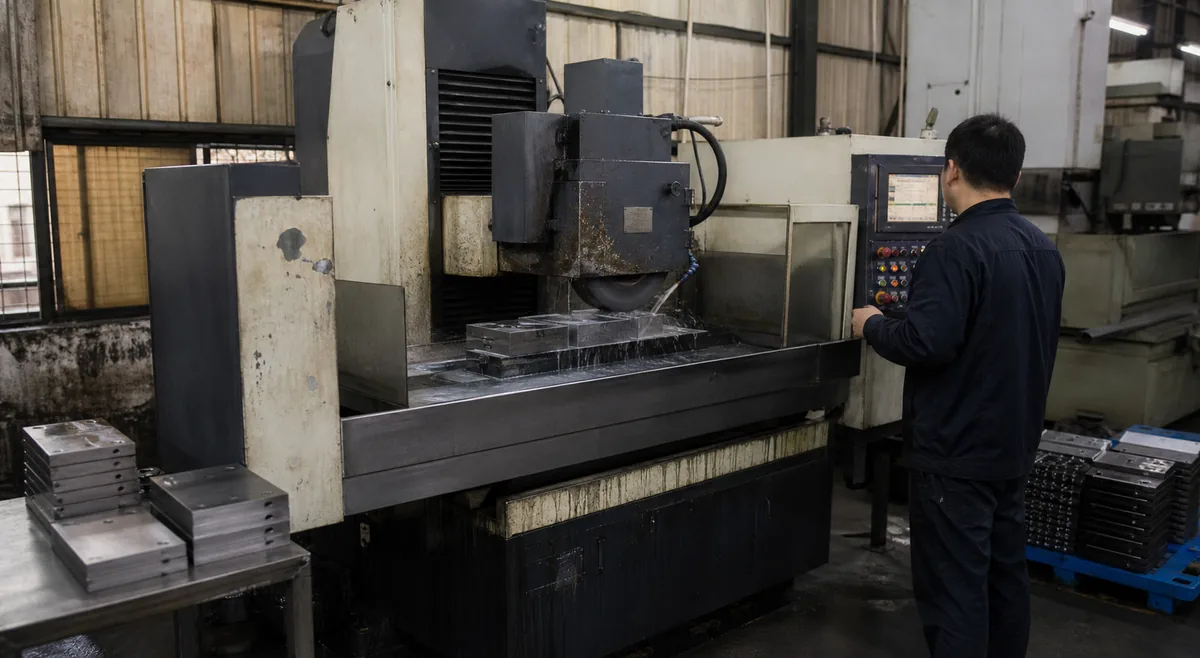
Surface grinding a flat, parallel face — Laser Cutting at VT machiningCMM-verified precision machining — Laser Cutting at VT machiningCNC turning centre producing shafts — Laser Cutting at VT machining
Starting your project takes one email. Send your CAD or 2D drawing, the metal grade and condition, the quantity and any finish or inspection requirements. We respond quickly with price, lead time and any DFM notes, in clear English.
Have a drawing ready? Send it with your quantity and material for a quotation, usually within one business day.
Laser Cutting refers to fiber laser cutting melts and ejects metal along a programmed path, producing a narrow kerf and a clean, near burr-free edge. VT machining produces each part to your CAD drawing, selecting parameters from your tolerance, finish and quantity requirements.
Which industries use Laser Cutting parts?
Laser Cutting parts are used across aerospace, medical, automotive, electronics, semiconductor and general industrial sectors — anywhere precise components are required.
What surface finish is achievable on with Laser Cutting?
Laser cutting leaves a clean cut face on the part with a small heat-affected zone; most parts need little secondary finishing.
Does Laser Cutting require dedicated tooling?
Most Laser Cutting work uses standard cutting tools and CNC programs; dedicated fixtures are made only when geometry or volume requires them.